





The View From Here (26-06)
Behind the Wheel – Part 1
“The road to success is always under construction.” – Lily Tomlin
For many people, getting behind the wheel of their car is something they hardly think about. They grab their keys, start the car and head off to work, the grocery store or dinner with friends. For me, driving represents something much bigger…independence.
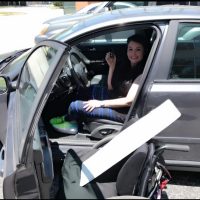
Following my spinal cord injury, driving again wasn’t as simple as getting back in my car and turning the key in the ignition. It required training, adaptive equipment (specifically, hand controls) and learning new ways to navigate the road.
Today, almost twelve years later, I drive using electronic hand controls, which allow me to accelerate and brake with my hands instead of my feet. They have given me the freedom to travel where I want, when I want, without relying on someone else to get me there. I’ve come to learn, over the years, that what many people don’t realize is that adaptive driving equipment can be just as important as the vehicle itself.
Recently, I purchased a new car and encountered a minor issue with the electronic system. So, I had to take my car back to the dealership. What should have been a straightforward service appointment, quickly became a lesson in awareness…or rather, the lack of it. As I explained to the many, many service people and mechanics at the dealership about the hand controls in my car and how the system works, I found myself doing something many people with disabilities know all too well…educating the “experts.”
My frustration built as I continually had to explain the hand controls and myself to one person after the next, after the next. I got a lot of “Yeah, yeah, we see this all of the time.” But actually, they had zero clue what this system was, because then after a few hours they came back to me saying, “Oh, we thought it was a GPS system,” and, then “What in the world is this in your car?!” Even after I had repeatedly explained myself, my hand controls and my injury over and over again. At the car dealership! I was mortified.
There is only so much explaining you can do, especially when those who should be helping aren’t actually listening. You just end up frustrated. And, on this occasion, I ended up in tears. The last thing you want to be doing at the car dealership is explain a spinal cord injury and your paralysis to everyone that works there, over and over and over again. For a pretty strong woman, who’s been through and survived quite a bit, ending up in tears at the car dealership was not on my bingo card for this year.
It honestly felt as though my concerns and my explanations were being filtered through assumptions, rather than truly being heard. I knew my equipment. I explained it at length, explained myself and the issue until I felt like I was blue in the face.
Many of us living with disabilities have experienced similar moments. We become accidental teachers, explaining our equipment, our accommodations and our lived experiences to people who have never encountered them before. While education is important, it can also be exhausting, frustrating and so irritating, when you are having to educate someone with every move you make, especially when you’re simply trying to solve a problem. And especially when no one is actually listening to you.
I regained my composure and continued to explain myself, my equipment and the problem until I found someone who would listen. A helpful mechanic who was willing to work on the problem. And…listen. So, I left that experience with an important reminder: Awareness begins with exposure. Most people don’t ignore adaptive equipment because they don’t care – they simply have never had the opportunity to learn about it.
Every conversation about accessibility creates an opportunity for understanding. Every question answered helps someone become more knowledgeable. And every person who learns about adaptive driving helps make the road a little easier for the next driver who lives with a disability.
Adaptive driving creates independence. But independence shouldn’t come with a constant lesson plan. In the coming months, I’ll share more about adaptive driving technology, the costs associated with adaptive equipment and some of the resources that may help individuals navigate the adaptive driving experience. And…I’ll share some of my personal stories along the way.
For now, I’m grateful for the freedom that my hand controls provide and I’m hopeful that greater awareness will help more people understand that accessibility isn’t a special feature – it creates a world that works better for everyone, not just for some of us.
And like any road worth traveling, it’s one we continue to build as we go.