






A Landmark Decision Years in the Making
By: Deborah Dietz
A Case That Changed Everything
This month, the 11th Circuit Court of Appeals ruled on one of DIG’s long-standing cases, one that shaped our work for many years.
This case focused on medically fragile & medically complex children who were living in adult nursing homes in Florida.
How It Started
The case began in 2011, when Larry Forman told Matt that medically fragile children were living in adult nursing homes across the state.
Matt was shocked. We all were.
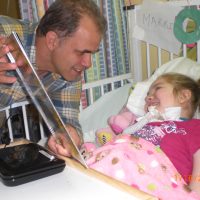
As he began investigating, it became clear that this was not an isolated issue. Many children were living in these facilities, separated from their families, without access to education, and without the ability to live like children.
They were often left sitting for hours with little interaction. In some cases, they were even served the same food as adult residents. One meal was tilapia fish. I can’t get that image out of my head. What child wants to eat tasteless institutional tilapia?
It was hard to believe this was happening in our state and that nothing was being done to stop it.
Understanding the Problem
As Matt learned more, one issue became clear.
The in-home services these children needed were not being provided. Families were left with impossible choices: try to meet complex medical needs on their own or place their child in a nursing home, sometimes far away.
The Legal Fight
The case was based on a simple idea: Children have the right under the ADA to live at home with their families, not in institutions.
Families should not be forced to choose between inadequate care and institutionalization.
Matt did not take on this fight alone. He worked alongside an incredible team, including Paolo Annino, Ed Grunewald, Jamie Ito, Jill Zebrowski, Caitlyn Clibbon, and attorneys from the U.S. Department of Justice, including Lindsey Weinstock, Justin Park, Beth Esposito, Travis England, and Ann Raish, among many others.
Here is a copy of the original letter that the DOJ sent to the state of Florida.
Together, they fought to bring these children home.

Where the Case Went
Many of the original facilities eventually closed. Some children returned home, while others were placed in facilities designed specifically for children.
In 2016, the original case brought by DIG was dismissed, leaving the Department of Justice to continue the litigation.
Supporting Families: Kids Crusaders
At the start of the case, DIG created a project called Kids Crusaders.
This project brought families together, giving them a way to connect, share experiences, and support one another. We created a Facebook community, featured stories in our newsletter, and sent Kids Crusaders t-shirts to families across the state.
One of our former clients, Julie Fivoranti, shared her story and her son Nick’s journey through a series of articles that are still available on our website.

What We Saw
As the case continued, we regularly visited one of the facilities where some of the children were placed.
Every time we visited, we hoped the children we knew would have returned home, but they never did.
We watched them grow up in these facilities. And sometimes, we watched them pass away.
One young man attended school each day. The school bus picked him up from the facility in the morning and returned him there in the afternoon. It was a powerful reminder of how deeply institutionalization shaped their lives.
Moments of Joy: Balloons & Tunes
During the holidays, we created a project called Balloons & Tunes.
Our team would visit the facility, bringing balloons, and music CD’s. Each child received a shiny balloon and a music CD.



The children looked forward to these visits. They smiled, laughed, and connected with us in ways that reminded us exactly why this work mattered.
One year, there were even wheelchair races in the hallway.


Another year, a generous donor provided I Spy books for every child. We made a special trip to deliver them, and the children were so excited.

Why This Decision Matters
This month, the 11th Circuit made something clear: The ADA is violated not only when individuals are institutionalized, but also when state systems place them at serious risk of institutionalization.
The court recognized that systemic failures in providing services can be a form of discrimination.
Looking Forward
This fight took far too long, and many families experienced unnecessary hardship.
But this decision affirms what we have always believed: Children should grow up at home with their families and in their communities.
We are hopeful that this ruling will lead to meaningful change in Florida and beyond and that families will finally receive the support they need to keep their children at home.
What Can You Do
If you have a medically fragile child in Florida, there are ways to stay informed and involved as this case moves forward.
Judge Middlebrooks of the U.S. District Court for the Southern District of Florida is responsible for overseeing the injunction. This means he must continue to evaluate whether the injunction is necessary and how it is being implemented, taking into account the public interest and the rights of the families involved.
As part of the appellate decision, the court will appoint a monitor, an independent third party, who will assess the state’s progress in complying with the injunction.
Here are some ways to stay engaged:
- Attend status conferences by Zoom
- Once a monitor is appointed, connect with the monitor and share your experiences
- Ask for clear and regular updates about the state’s progress
DIG will continue to share updates and information about upcoming conferences as they are scheduled.
Read the latest quarterly report here.