The View From Here (26-03)
“The more we see people with disabilities in everyday life, the more natural disability becomes a part of our world.” – Rebekah Taussig
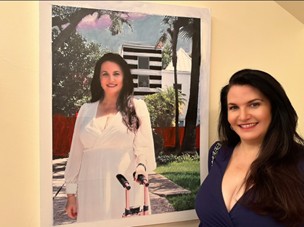
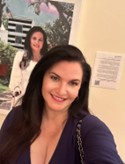
Recently, I attended the opening of artist Ray Elman’s portrait exhibition at the Adrienne Arsht Center for the Performing Arts. The exhibit featured portraits of artists, leaders and changemakers from across our community, in South Florida. I was honored to be one of the locals Ray featured in his exhibit. It was truly a celebration of Miami and the people who shape it.
Something struck me that night at the opening of his exhibit. Among the many faces on the wall, were two people living with disabilities. Not in a disability-themed exhibit. Not during Disability Awareness Month. Not in any “special” category. Just there. Included.
That simple fact felt incredibly powerful. For many of us in the disability community, representation often happens within disability-focused spaces: disability conferences, advocacy campaigns, awareness events and community gatherings. These spaces are vital. They are where we connect and push for the changes that make our communities more accessible and equitable.
But true inclusion happens when disability is visible everywhere – not as a central theme, but as a natural part of the human experience.
At this exhibit, the portraits didn’t frame disability as the defining narrative. They simply recognized two individuals as a part of the broader community. Our presence wasn’t presented as “inspirational” or “extraordinary.” It was normal. And that’s exactly why it mattered.
Representation is powerful not only when it tells a disability story, but when it reminds the world that people with disabilities are a part of every story. We are artists. We are professionals. We are advocates. We are neighbors. We are leaders.
When we are visible in spaces that have nothing to do with disability – arts, education, business, politics, culture – it quietly shifts perceptions, moving disability from the margins into the mainstream.
For decades, disability advocacy has focused on access: access to buildings, transportation, education, employment and civic participation. Those efforts have opened doors that were once firmly closed. But, I believe, representation is what truly changes hearts and minds. It sends a message to those of us living with disabilities that You Belong Here Too. Not just in spaces that were designed specifically for you. But everywhere.
That evening at the Arsht Center felt like a small but meaningful glimpse of that future – a world where we are included, not because the focus is disability, but because we are a part of the community. And we always have been.
Sometimes progress doesn’t look like a headline or a policy change. Sometimes it looks like a portrait on a wall, quietly reminding us that disability has always been part of the story.