From Being a Number to Building Possibility
By: Alfredo Iglesias
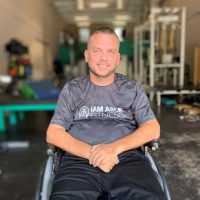
Alfredo Iglesias is a spinal cord injury survivor who is the co-founder and president of iAM Able Fitness, a Miami-based nonprofit organization focused on helping individuals with spinal cord injuries (SCI) and paralysis through therapy, exercise, mentoring, and community support.
There were two moments early in my recovery that made something painfully clear: the system I was placed in was not designed for my potential.
In one setting, I attended traditional therapy sessions that were triple booked. A one-hour appointment meant roughly twenty minutes of direct attention. The rest of the time, I waited. Watched. Repeated movements without guidance. The intensity simply wasn’t enough – not for recovery, and certainly not for rebuilding a life.
In another session, I was told that certain technologies and treatments – approaches that could meaningfully stimulate neurological recovery – were not available to me. Not because they didn’t exist, but because insurance wouldn’t cover them.
In those moments, I didn’t just feel frustrated.
I felt alone.
And I felt like the opposite of empowered.
I began to understand that I wasn’t being treated as a person with possibility – I was being managed as a case, a number, a dollar amount.
When Support Comes – and When it Doesn’t
My family carried me through those early days. Their belief in me never wavered, even when the system around us did. What hurt the most wasn’t the injury itself – it was realizing that my recovery wasn’t truly the priority. The system seemed structured to sustain careers and workflows, not to partner with me in my healing.
Recovery felt transactional.
And deeply impersonal.
What I wished then – and what I wish now for anyone newly navigating disability – is that someone with lived experience had told me this:
Your life does not begin again after recovery. It continues now.
The Moment That Changed Everything
I was fortunate, and I say that carefully.
My injury was tied to my wedding. A love story. And stories like that tend to resonate with people. That visibility brought attention, resources, and support that many others never receive. Through community fundraising and public support, I was able to attend a specialized, out-of-state program that changed my understanding of what rehabilitation could be.
The intensity was different.
The expectations were higher.
And, for the first time, I felt my independence expanding – not shrinking.
While there, I spoke with a friend back home in Miami who was also living with paralysis. During our conversation, he said something that stopped me cold:
“You’re lucky to be there.”
He didn’t mean harm. But, after we hung up, I wept.
He was right. I was lucky – not because my injury was different, but because my story was more visible. Others with the same diagnosis, the same pain, the same drive were not afforded the same access simply because their stories didn’t capture public attention.
That realization stayed with me.
It felt unfair.
And I couldn’t let it go.
That was the moment I knew this type of programming needed to exist back home. Not for a few, but for the community.
That is why iAM ABLE exists.
Because I could not accept a system where financial barriers determined who deserved access to possibility.
Redefining Independence
Before my injury, I took independence for granted.
After my injury, I thought independence meant walking again.
Today, I understand it differently.
Independence is the ability to manage and maintain a happy, productive life – however that looks. It means accepting help when needed without letting it become a crutch. It means continuing to live, not postponing life while waiting to reach a single milestone.
One of the most common misconceptions I see is this idea that life begins after independence is achieved. People say, “I’ll do that when I can walk again.” But life doesn’t wait, and neither should joy.
Every day matters.
Every small win counts.
Why Community Changes Everything
What has made me most independent today isn’t just equipment or therapy – it’s community.
A network of friends who live in this reality. People who share lived lessons that no textbook can teach. That kind of connection educates, supports, and reminds you that you’re not navigating this alone.
That belief is why organizations like Disability Independence Group are so vital. DIG has long championed independence not just as a physical outcome, but as a social, legal, and human right grounded in self-advocacy, dignity and inclusion.
Our missions intersect in a shared truth.
People with disabilities deserve systems built with them, not around them.
Moving Forward – Together
If you are navigating life with a disability, know this: Your path does not need to mirror anyone else’s to be meaningful. The journey is not about returning to who you were – it is about discovering who you can still become. Independence is not a finish line; it is the daily act of choosing to live fully, even when the road is uncertain. With shared experience, mutual support, and systems that recognize our humanity, independence stops being something we chase and becomes something we live. That belief continues to guide my work – and it’s one worth holding onto.
You can contact iAM ABLE at www.iamable.org or call 305-283-9717 for more information.